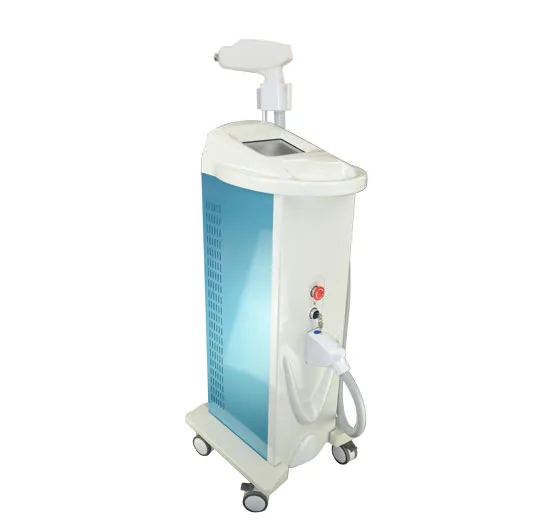
Pmise DL-07
The Pmise DL-07 is an 808nm diode platform built for volume hair removal on shaved skin. Here is how to warm it, set it, space sessions and keep it running.
What this platform does
Choosing a diode laser hair removal machine is the easy part. Running one well is the job. Say a clinic owner asks what actually changes between week one and week fifty with the same box on the trolley. The honest answer is rarely the hardware. It's the warm-up routine, the starting numbers, and whether the technician can spot the endpoint without asking anyone.
The DL-07 is an 808 diode laser hair removal machine with sapphire contact cooling over a closed water loop. The wavelength has a published track record: in one comparison study, hair clearance with a linear-scanning 808 nm diode persisted at 18 months of follow-up (PubMed). Pulse width adjusts from 5 to 200 ms and repetition runs up to 10 Hz. That's the whole specification we'll quote here, because the rest of this page is about operating it. Shave. Cool. Test patch. Slide. Rebook.
We supply professional aesthetic laser and energy-based equipment to clinics, med spas and distributors. This is a clinic device, not a home unit, and the treatment decisions belong to your trained, licensed practitioner. What follows is field guidance, not a protocol that overrides your clinical supervisor.
Technical detail
| Wavelength | 808 nm |
|---|---|
| Laser type | Diode, high-power stacks |
| Mode | Static + high-speed sliding |
| Spot size | Up to 12 x 12 mm |
| Cooling | Sapphire contact, -4 to 0 degrees C |
| Skin types | Fitzpatrick I to VI |
| Warranty | 12 months, lifetime maintenance |
How it works
Cooling first, always
Switch the cooling unit on before anything else. Give it 5 to 8 minutes. Our device documentation says to wait until both temperatures read 18 C before you power the machine, and it lists 18 to 26 C as the temperature window that suits the hardware. If the sapphire tip isn't cold to the touch, something is wrong with water level or flow. Stop there. Don't treat through a warm window; check the machine instead.
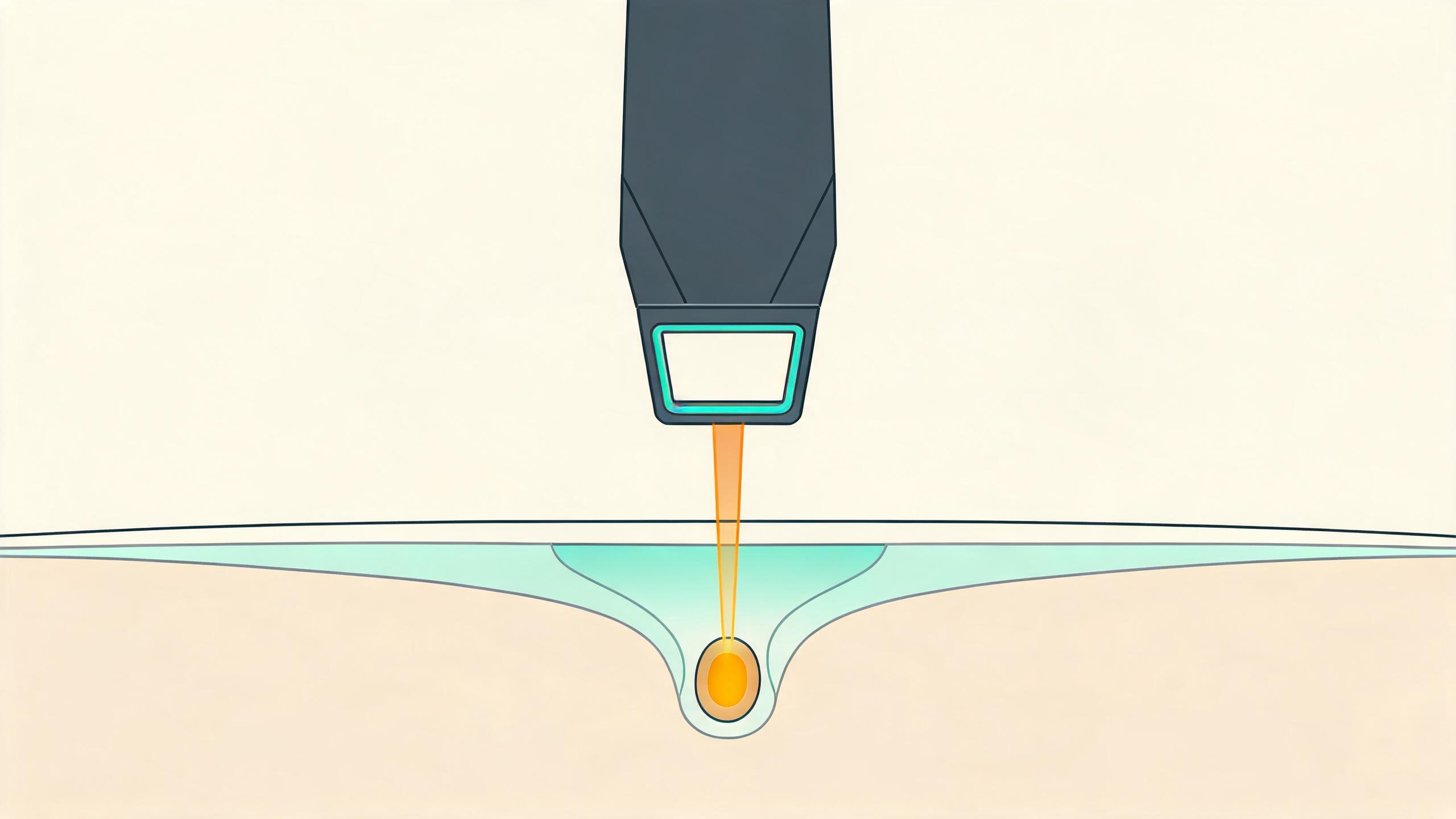
How the light does its work
At 808nm, melanin in the follicle absorbs the light and converts it to heat. The pulse is long enough that heat conducts into the structures around the bulb, while the chilled sapphire window keeps the epidermis calm. That balance is why 808nm became the mainstream professional wavelength for hair reduction across Fitzpatrick I to VI when it's paired with contact cooling. Note the wording: hair reduction. Not removal. Anyone selling you certainty is selling you something else.
Two parameters do most of the clinical work. Pulse width is how long each pulse lasts; repetition rate is how fast the machine fires. The documentation pairs them: 5 to 20 ms at 1 to 10 Hz, 25 to 40 ms at 1 to 5 Hz, 45 to 100 ms at 1 to 2 Hz, and above 100 ms at 1 Hz. A long pulse on a fast rep rate isn't a setting. It's a mistake.
Set low, climb slowly
Our device documentation starts this platform at 33% power, 20 ms duration and 10 Hz, then walks energy up according to how the client feels it. Start from the documented initial number for the area and skin type, and increase only on the basis of patient reaction. Move the handpiece quickly. Small jumps, 5% in power or 5 ms in duration at a time, and talk the client through each one.
Applications and protocol
Starting points by skin type and area
Our device documentation starts skin types I and II at 8 to 10 J, III and IV at 7 to 8 J, and V at 4 to 5 J. Durations run 30 to 40 ms on the lip, 30 to 40 ms under the arm, 20 to 45 ms on arms and legs, and 20 to 45 ms on the bikini line. V skin sits at the lower end of each range.
| Skin type | Starting fluence | Lip duration | Arm / leg duration | Typical frequency |
|---|---|---|---|---|
| I to II | 8 to 10 J | 30 to 40 ms | 20 to 45 ms | 3 to 10 Hz |
| III to IV | 7 to 8 J | 30 to 40 ms | 20 to 45 ms | 3 to 10 Hz |
| V | 4 to 5 J | 30 to 35 ms | 20 to 40 ms | 3 to 10 Hz |
Shave the area first. If a little hair remains in the skin, cool it with the treatment head without firing. Then test. One or two shots on the inner forearm at reduced energy, wait a few seconds, look. Angry redness or stinging there means you don't treat that client today.
The endpoint, and stopping
Our documentation describes the finish as papules around the hair follicle with the skin turning red and hot. That's perifollicular edema. Reach it and stop. If it arrives early, drop the energy or shorten the duration rather than pushing on. Log the settings and the skin reaction every visit, because that record is what makes the next session's starting point a decision instead of a guess.
Screening and spacing
Our device documentation lists contraindications plainly: photosensitising medication such as tetracycline, any lesion without a firm diagnosis, pacemakers or similar implants, serious diabetes, hypertension, heart disease or epilepsy, anticoagulant use within the past two weeks, a tendency to keloid scarring, pregnancy, and recent sun exposure or tanning. Dark moles get shielded, never shot. Our documentation sets a floor of 28 days between passes on the same area. Book the next appointment before the client leaves the room.
For darker skin, pair the DL-07 with a long-pulse 1064nm Nd:YAG, which spares epidermal melanin better at depth. Fine, light or grey hair barely responds to any melanin-targeted laser, and an E-light platform is the more honest answer there. Protocol design across the modality sits on our laser hair removal solutions page.
Key advantages
What it changes on the floor
Speed, mostly. Contact cooling plus sliding technique means large areas clear quickly, and most clients tolerate it without numbing cream. That removes a pre-appointment step and its associated risk. Consistency is the quieter win: a diode stack fires the same shot in month one and month twelve, so a junior technician gets a predictable machine to learn on. Predictable is underrated when you're training staff.
Running costs are electricity, water and eventually the diode stack itself. No gel. No flashlamp on a shot counter, which is the line that changes the maths against IPL, where the lamp is a scheduled consumable with a price attached.
Water is the part everyone neglects
Distilled or pure water only. Tap water fouls the loop and you'll start seeing water-quality warnings. Change it at least every thirty days under heavy use, run the machine a few minutes between drain and refill, and keep a resin filter on the shelf for the ion warning. Fault messages you'll meet mid-treatment include High Temperature, Low water level, Substandard quality of water, Cold water terminal without current, Communication Fail, Power or handle fault, Simmering please wait, and Please release the cure switch. Stop firing, check the loop, let it cool, then contact support. The routine lives on our daily machine care page.
Where it doesn't win
Two faults account for most no-fire calls: poor water flow and a handpiece that isn't seated properly. Keep the sapphire window spotless, because a dirty window loses energy and the failure mode is sneaky. Your technician feels weak results, cranks the power, and that's how burns happen. And a diode won't fix a client with white or grey hair. No wavelength in our catalogue will.
Spare parts, handpiece service and training support are covered on our service page.
Frequently asked questions
Is a diode laser hair removal device a good choice for a clinic?
For dark hair on a suitable skin type, yes, it's the workhorse of most clinics. It's a permanent hair reduction method, not permanent removal, so set client expectations honestly. The AAD tells patients most people need several treatments and may want maintenance later. The machine matters less than the operator reading the endpoint correctly.
Which laser is better, diode or IPL?
Different jobs. A diode delivers one coherent wavelength at 808nm, so follicle targeting is deeper and more selective, and sessions are typically fewer for comparable reduction. IPL is broadband, less selective, and multi-service: photo rejuvenation, pigment and vascular work. We supply both categories, the DL-07 diode and the MF-05 and PE-01 E-light platforms, so pick by workflow, not by brand.
Does diode laser remove hair permanently?
No. The accurate phrase is permanent hair reduction. Our device documentation sets a minimum of 28 days between passes on the same area, and studies of 808nm diode work report reduction that persists at follow-up rather than total clearance. Sell a course, say plainly that touch-ups happen, and you'll save yourself refund arguments.
Which laser diode hair removal machine is the best for a professional clinic?
The one your team can run safely and consistently. Ask any supplier for the wavelength, pulse-width range, repetition rate and cooling method in writing, then ask what documentation, training and fault-recovery support come with it. We don't publish power in watts, spot size or maximum fluence for the DL-07 because our published pages disagree, so request those directly from whoever you buy from, including us.
What should I check before the first pulse of the day?
Cooling unit on first, then wait 5 to 8 minutes until both temperatures read 18 C before powering the machine. Confirm the sapphire tip is genuinely cold and the water loop is circulating. Set your parameters, press the centre button until it turns green for Ready, then fire. If the window isn't cold, stop and check water level or flow rather than treating through it.
References
- Bouzari N et al. Hair removal using an 800-nm diode laser: comparison at different treatment intervals of 45, 60, and 90 days. Int J Dermatol, 2005
- American Academy of Dermatology — Laser hair removal: FAQs
- US FDA 510(k) K180353 — Diode laser hair removal device, Fitzpatrick I-VI, permanent hair reduction measured at 6, 9 and 12 months
- Long-term efficacy of linear-scanning 808 nm diode laser for hair removal compared to a scanned alexandrite laser - PubMed
Quote the Pmise DL-07.
Tell us your country and clinic type. We reply within 24 hours with technical detail, pricing and the spare-parts picture.