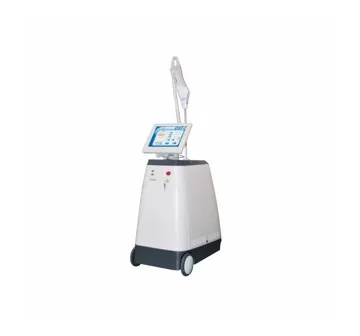
Pmise LN-01
The LN-01 is the handpiece you reach for when melanin is not on your side, and this page is about running an nd yag machine well rather than reading its spec sheet.
What this platform does
An nd yag laser machine is not one thing. The crystal is neodymium-doped yttrium aluminium garnet, lasing at 1064nm, but what the light does depends on how the box fires it. Ophthalmic YAG cuts inside the eye; this page is about the aesthetic long-pulse 1064nm Nd:YAG for hair reduction and vascular work. Pmise supplies the LN-01 for that job. Q-switched Nd:YAG is separate, covered by our QN-03 and QE-01, and we don't supply ophthalmic YAG, alexandrite, picosecond or erbium YAG (2940nm) lasers. Most clinics buy the LN-01 for the bookings their diode turns away: Fitzpatrick V and VI, the recently tanned client, leg veins on someone who flinches at the word needle.
Technical detail
| Wavelength | 1064 nm |
|---|---|
| Pulse type | Long-pulse Nd:YAG |
| Spot size | Up to 9 mm |
| Cooling | Sapphire contact cooling |
| Skin types | Fitzpatrick IV to VI safe |
| Applications | Hair, vascular, onychomycosis |
| Warranty | 12 months, lifetime maintenance |
How it works
Three controls decide nearly everything on a long pulse nd yag laser machine: fluence, pulse width, spot. Our internal training material on light and tissue interaction makes a distinction worth memorising. A hair follicle has two targets a clinician cares about, the isthmus and the dermal papilla, but the structures that absorb the light are the shaft and the matrix. Heat has to travel from one to the other. So the clock you care about isn't thermal relaxation time, it's the longer thermal damage time that lets heat spread from the pigment out into the whole follicle. Too short a pulse and you cook the shaft while the papilla shrugs it off.
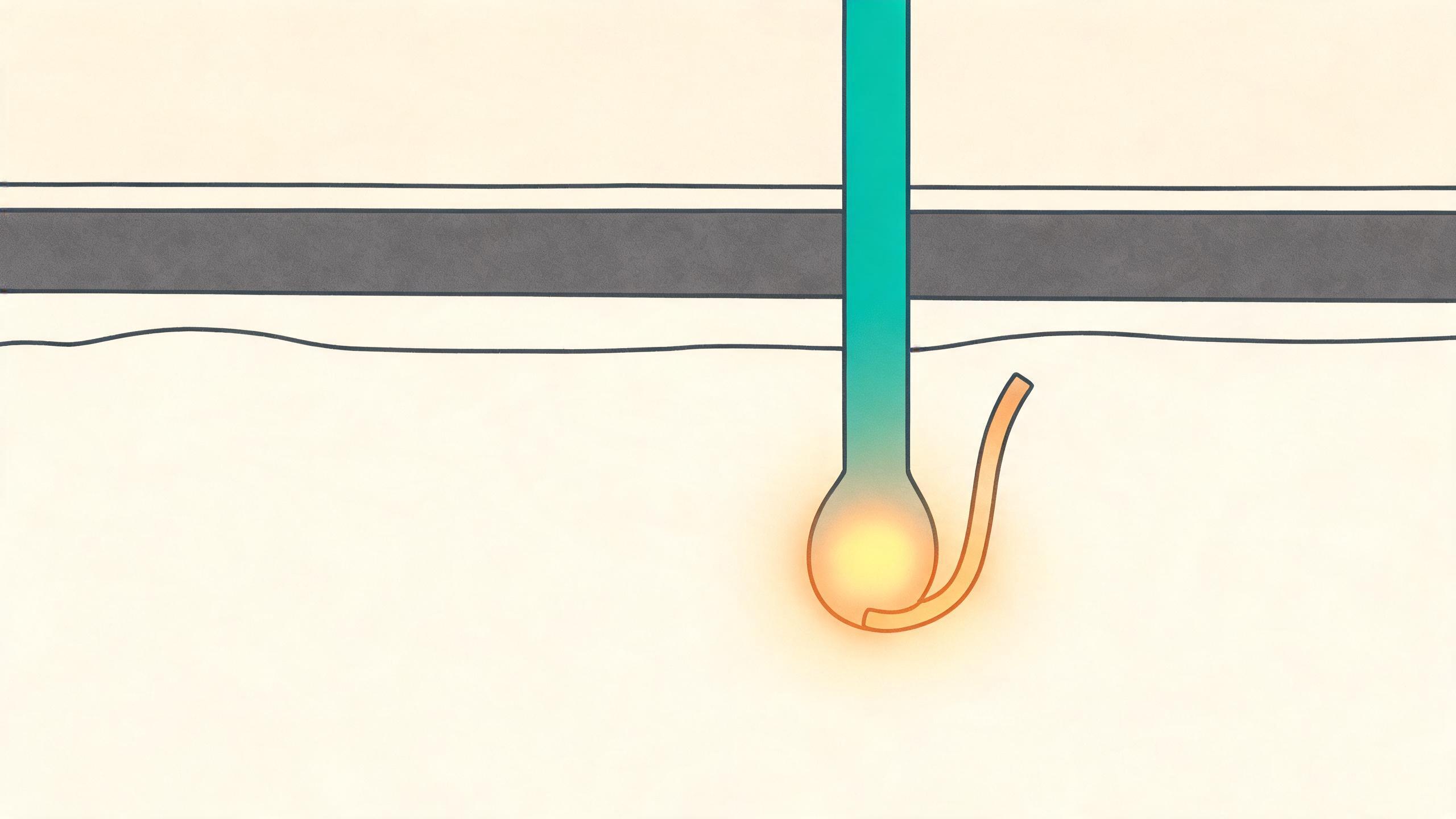
Vascular work runs on a different chromophore. Oxyhaemoglobin absorbs 1064nm modestly, but heating it converts it to methaemoglobin, which our archive records as absorbing this wavelength roughly three times more strongly than oxyhaemoglobin and about thirteen times more strongly than the deoxygenated form. Practical translation: the first stack primes the vessel, the second closes it. Stack too fast and you heat the epidermis instead.
Spot size is the quiet variable. A wider spot loses less energy to scatter at its edges, so at identical fluence it reaches deeper. Widening the aperture isn't a comfort setting, it changes your treatment depth. Narrow it for a thread vein beside the nose; open it for coarse hair on a thigh. The DL-07 diode works on a shorter wavelength and a different logic, which is why the two sit side by side in a catalogue rather than competing.
Applications and protocol
Screen before you switch anything on: Fitzpatrick type, recent sun or self-tan, current medication, previous treatments and how the skin behaved after them. Our device manuals list the hard stops plainly: recent hormone therapy or suspected endocrine abnormality, active skin infection, a history of herpes simplex or staphylococcal infection, keloid or hypertrophic scarring, tattoo ink inside the treatment field, pregnancy, photosensitive skin, and poorly controlled hypertension, cardiac disease, diabetes or epilepsy. Vitiligo and psoriasis clients need a Koebner warning in writing. For vascular sessions the manuals add recent oral isotretinoin and existing scarring.
Screening, staffing and scheduling before you buy
Before you commit to a long-pulse 1064nm unit, map the screening, training and scheduling it will demand. Screening is the same list the device manuals give, applied at the booking stage rather than the couch: Fitzpatrick type, recent sun or self-tan, medication, and the hard stops. Training is not optional. This is not a machine you hand to a new hire on day one, so plan supervised sessions and a written sign-off before anyone treats alone. Scheduling has to respect the slower per square centimetre pace: a full leg is a proper appointment, not a lunchtime slot, and stacking three back to back will tire a technician's aim before it tires the machine. Build the diary around that, not around the diode's throughput.
Then a test spot, off to one side, and a wait. Perifollicular oedema is your endpoint for hair. Grey-white skin or immediate blistering means the fluence was wrong. Everyone in the room wears rated eyewear, including the person holding the phone. A Class 4 controlled area needs to be clearly marked and meet the full requirements for that class. Health Canada's safety guidelines for facility owners and operators are a sensible template whatever your local rules say.
Starting points from our device documentation
These are documented starting points, not universal protocols. The treating clinician sets final parameters.
| Skin type | Hair removal (pulses / delay / width) | Vascular, 1mm spot (pulses) |
|---|---|---|
| I / II | 3-4 / 2 / 2 | 3-4 |
| III / IV | 2-4 / 2 / 2 | 2-3 |
| V / VI | 2-3 / 2 / 2 | 2 |
Our device documentation caps any single area at three passes per session and tells the operator to start at the lowest setting and climb on patient feedback. For varicose veins it notes the area should turn purple after one treatment. Alster and colleagues, writing in Archives of Dermatology in 2001, gave darker-skinned patients three monthly 1064nm sessions at 40 to 50 J/cm² and reported substantial reduction holding up a year later. Tanzi and Alster followed in 2004 across all phototypes and found reduction peaked a month after the series then slid back by six months. Tell your client that curve at consultation.
Aftercare is dull and non-negotiable: cooling, no hot showers or gym for a day or two, sunscreen, and no waxing or plucking between sessions. Post-inflammatory hyperpigmentation is the complication you'll meet most often in darker skin, so photograph everything and treat pigment early. Anything atypical rather than simply irritated goes to a physician, not to a second pass. Our vascular lesions and hair removal pages carry the wider workflow.
Key advantages
Long-pulse Nd:YAG is slower per square centimetre than a diode in glide mode. Accept that when you build the diary. A full lower leg is a proper appointment, and stacking three back to back will tire a technician's aim before it tires the machine. Two things buy the time back: contact cooling that lets you work at the fluence you actually need, and a spot dial the operator can change without stopping to swap tips.
Consumables are refreshingly boring. No disposable cartridges to reorder, no cryogen canister to run dry, so your running cost is largely lamp and rod life plus electricity. Cleaning the sapphire window between clients takes seconds and protects your energy output more than any service visit will. Our archive also notes that a detachable treatment handpiece keeps after-sales repair cost down, since a damaged handle is replaced rather than the console. Worth confirming against your own service terms before you sign, and worth asking any supplier to put in writing. See service for how that conversation usually runs.
Now the honest limits. Melanin absorbs 1064nm weakly compared with shorter wavelengths, so you push more fluence for the same follicular damage and the margin between a good endpoint and a burn narrows. Clinical studies have demonstrated less hair reduction with the Nd:YAG than published results for ruby or alexandrite, and light, blonde or grey hair simply won't respond because the chromophore isn't there. This is not a machine you hand to a new hire on day one.
The commercial case is about who else in your city can say yes. Darker-skin hair removal and leg vein work are underserved in most markets, they attract clients who compare outcomes rather than prices, and they rebook on a schedule.
What to check before you buy an Nd:YAG laser machine
Use this buyer checklist before you sign anything. Confirm the mode: long-pulse for hair and vascular work, Q-switched for tattoo and pigment, and aesthetic rather than ophthalmic. Ask for the device documentation, including starting parameters and the contraindication list. Check the handpieces and cooling: a detachable treatment handpiece keeps after-sales repair cost down, and contact cooling lets you work at the fluence you actually need. Ask what happens when something fails, and get the answer in writing. Pmise supplies the LN-01 long-pulse 1064nm Nd:YAG, along with Q-switched models QN-03 and QE-01, and we don't supply ophthalmic YAG, alexandrite, picosecond or erbium YAG (2940nm) lasers. We don't publish prices, warranty terms or service response times, so those come from the seller directly. See nd yag hair removal machine and professional machine selection by clinic profile for the wider buying workflow.
Frequently asked questions
What is an Nd:YAG laser used for?
In aesthetics, a long-pulse 1064nm Nd:YAG is used for hair reduction on darker or tanned skin and for vascular lesions such as facial veins and leg veins up to about 3mm. The same crystal in Q-switched form is used for tattoo and pigment work, which is a different treatment category. Ophthalmic YAG systems are a third, separate use, and we don't supply those.
What is the main disadvantage of the Nd:YAG laser?
Two things. It's slower per square centimetre than a diode, so a full leg is a real appointment. And melanin absorbs 1064nm weakly, so you push more fluence for the same follicular damage, which narrows the margin between a good endpoint and a burn. Clinical studies have also shown less hair reduction with Nd:YAG than published results for ruby or alexandrite, and it won't touch blonde, grey or fine light hair.
Where can I buy an Nd:YAG laser machine for a clinic?
Directly from a supplier who will state plainly which mode the unit runs and what they do and don't supply. Pmise supplies the LN-01 long-pulse 1064nm Nd:YAG, along with Q-switched models QN-03 and QE-01. Ask any seller for the device documentation, the starting parameters, and confirmation that the unit is aesthetic, not ophthalmic. We don't publish prices, warranty terms or service response times, so those come from the seller directly.
How much does an Nd:YAG laser machine cost?
We don't publish prices, and any figure you see online should be treated with suspicion until you know the mode, the wavelength it actually delivers, and what support comes with it. A long-pulse unit and a Q-switched unit are different machines with different price structures. Ask for a written quote that names the mode, the handpieces included, and what happens when something fails.
Can I treat someone who is tanned with a yag laser machine?
This wavelength is the safest of the common hair removal options on pigmented or tanned skin, which is precisely why you own it. That's not permission to skip the test spot. A fresh tan still raises epidermal absorption and your risk of pigment change, so drop fluence, lengthen the pulse, and reschedule anyone whose tan is days old rather than weeks. Our device manuals list recent sun exposure as a contraindication for vascular work outright.
References
- Alster TS, Bryan H, Williams CM. Long-pulsed Nd:YAG laser-assisted hair removal in pigmented skin: a clinical and histological evaluation. Arch Dermatol. 2001;137(7):885-889.
- Tanzi EL, Alster TS. Long-pulsed 1064-nm Nd:YAG laser-assisted hair removal in all skin types. Dermatol Surg. 2004.
- Baldaia L, Dias-Neto M, Almeida Pinto J. Long-pulsed 1064nm Nd:YAG laser in the treatment of leg veins: systematic review. Vascular. 2025;33(1):151-166.
Quote the Pmise LN-01.
Tell us your country and clinic type. We reply within 24 hours with technical detail, pricing and the spare-parts picture.