Vascular lesions
Red veins are easy to sell and easy to get wrong. The gap sits in who you turn away at consult, how your technician reads the endpoint, and whether the room time you booked matches the console you bought.
Four things book as red veins. Two of them are yours.
A client points at her nose in the mirror. You point at the machine. Everybody is happy right up until session three, when the threads are still there and nobody on your team can explain why. A vascular laser sells itself; sorting cases at consult is what nobody trains for.
Telling the four apart before the goggles go on
Simple telangiectasia, the fine visible threads across cheeks, nose and chin. Diffuse redness and rosacea flushing. Congenital port-wine stain. Infantile hemangioma. Your front desk books all four as "red veins" and your technician has to tell them apart.
The first two are ordinary clinic work. Our internal dermatology training material describes telangiectasia as a normally invisible capillary widened enough to be seen, with the dilated papillary vessel measured histologically between 0.1 and 1.0 mm across. Common, cosmetic, responsive. Leg vessels under about 3 mm are on the list too, though they behave far less obediently than a face.
The other two are medical. A port-wine stain is a congenital capillary malformation that does not regress, and our archive flags that once it turns proliferative or nodular it stops responding well to light at all. Where it sits decides your next move. A facial stain touching the V1 territory — forehead, upper eyelid, the skin around the eye — carries a far higher chance of Sturge-Weber involvement, and Zallmann and colleagues, reviewing screening practice in Pediatric Dermatology in 2018, argue for early specialist referral when the stain covers forehead-derived skin. Eye pressure and neurology first. That one never gets booked as a course in your room. An infantile hemangioma has a clock running on it. The 2019 clinical practice guideline published in Pediatrics by Krowchuk and colleagues puts the fastest, most significant growth between one and three months of age, says growth has finished by five months in most cases, and asks for referral by one month when the lesion looks problematic. Photograph it, refer the baby, keep the relationship.
The questions that cancel a booking
Screening is short. No excuse for skipping it. Our device documentation lists oral retinoid use in the past year or two, scarring history, recently tanned skin, pregnancy, light-sensitive constitution, and poorly controlled hypertension, heart disease, diabetes or epilepsy. One more deserves reading aloud at your next team meeting: the patient with expectations you cannot meet. That's a contraindication, not a personality trait.
Legs get their own questions. Varicose or bulging veins? Heavy, aching legs after a day standing? Ankle swelling, old sclerotherapy, previous vein surgery? The 2023 SVS, American Venous Forum and AVLS varicose vein guidelines note duplex ultrasound can exclude associated venous incompetence here, and that incompetent reticular feeder veins should be treated alongside the surface threads. Any of that, or a visible feeder network, and the client goes for a duplex before you sell a course. Reflux left untreated underneath means the threads come back — and your machine gets blamed. All of this is operator education, not medical advice; every treat-or-refer call belongs to the licensed clinician on your floor.
Reading the endpoint, and why cooling can kill the result
Why you don't get a second go at the same vessel
Blood moves. That single fact, spelled out in our light-tissue interaction notes, changes how a session runs: the target isn't a pigment granule sitting still, so you choose a dose that closes the vessel on the pass you're making. Fire again at a fluence that already failed and you mostly buy irritation. Teach your technician to change something and re-place the spot, never simply repeat it.
Heat is on your side. Heated blood converts haemoglobin to methemoglobin, which the same archive records as absorbing 1064 nm roughly 13 times more strongly than deoxyhaemoglobin. The shot partly builds its own target.
Reading the endpoint is the whole skill
Watch the vessel, not the screen. With laser you want the thread to blanch or disappear under the beam; on diffuse redness the published endpoint is gentler. Piccolo and co-workers, reporting an IPL series in the Journal of Clinical Medicine in 2024, took moderate redness together with closure of the telangiectasias as their stopping point.
Our training notes give three plain signs that energy density is right for light work: the client feels the shot, mild redness and swelling follow, warmth lingers thirty to sixty minutes. Miss all three and you've wasted a session. Overshoot and you're into blistering.
Cooling is a technique choice, not a comfort setting
Here's where confident operators go wrong. More cooling isn't automatically safer, and our clinical archive says so bluntly. Simple telangiectasia sits in the papillary layer, close to the surface, so heavy contact cooling shields the target along with the epidermis and leaves you with a treatment that does nothing. Shorten cooling time or ease the tip temperature.
Flip it for port-wine stains and hemangiomas. Those are large malformations needing genuinely high energy density, where epidermal cooling is mandatory. A third case: with papillary dermal vessels our notes advise against cooling synchronously with the shot, preferring active pre- and post-cooling. Any cooling pulls heat out of the path, so output has to rise to compensate. Two habits to drill into new staff: keep the sapphire in firm contact, and hand darker-skinned clients a longer-wavelength filter before anyone touches the fluence.
One session, and how to space the course
One session, start to finish
- Consult and photograph. Same light, same angles, every visit. By month three clients forget what they looked like in month one.
- Clean the field. Our archive treats epidermal debris, excess keratin and follicular contents as competing absorbers that steal light from the vessel, so cleanse deeply first. An OJ-01 water-oxygen jet pass does it fast and doubles as theatre for the client.
- Eyewear on. Everyone. Operator included.
- Test spot, then wait. Place it at the consult, a session ahead of treatment — that's what our installation trainers push. On Fitzpatrick IV and above it isn't a formality.
- Treat by placement. Discrete threads get worked vessel by vessel; diffuse redness gets covered with a window. The pacing is nothing alike — don't let one habit bleed into the other.
- Cool and brief. Cold compress, then the aftercare sheet into their hand.
Spacing the course, and what to promise
Two published anchors are worth building a package around. Ozyurt and colleagues, writing in The Scientific World Journal in 2012, ran five sessions at four-week intervals with a long-pulsed 1064 nm laser and reported marked improvement or clearance in 97 percent of facial telangiectasia against 80.8 percent of leg telangiectasia. Read their discussion before you quote that 97 percent, though. The same authors state plainly that a 1064 nm Nd:YAG is not the first choice for superficial vessels on the face, where depth isn't the concern, and warn that treating small-calibre superficial vessels at fluences that high carries a risk of injury. Their numbers, their caveat. The 2024 IPL series above ran three sessions a month apart, strongest change after the third.
Our own clinical observation notes are more optimistic on isolated vessels: with a long-pulse 1064 nm laser, many treated lesions closed drastically after one or two sessions. So sell a short course, review with photographs at session two, stop early if you can. And never price a leg course off facial numbers — least of all when nobody has ruled out reflux underneath, because those cases recur and no session count you quoted will survive it.
What your technician will meet afterwards
Expected, and worth naming in advance: redness, real pain during the shot, mild swelling, that half-hour of warmth. Transient problems in the 2012 series included post-inflammatory hyperpigmentation, blistering, superficial erosion and crusting, with focal thrombosis in about 7 percent of leg cases. Our device documentation lists pigment change and burns as the two complications for vascular sessions.
Management is unglamorous. Cool it, keep it out of the sun, treat a burn as a burn, and stretch the interval rather than shortening it. Never re-treat a field still inflamed. Pigment change on darker skin is the one that turns into a refund — same risk we describe on the melasma page.
Practical job this week: get the refusal list, the leg questions and your cooling-plus-energy settings onto one consult sheet the front desk actually uses. Our service team schedules installation training and hands-on coaching.
Nd:YAG or E-light: routing by lesion
Throughput, the number nobody checks before signing
Buyers compare wavelength and fluence. Then the machine lands in the room and the real constraint turns out to be repetition rate. The LN-01 long-pulse Nd:YAG runs at 1064 nm with sapphire contact cooling and fires at around half a hertz — a shot roughly every two seconds, each placed by hand on a single vessel.
Do the arithmetic before your receptionist sells a fifteen-minute add-on. A nose and two cheeks carrying real thread burden runs somewhere around 150 to 250 placements — a planning estimate off the spot size, not a clinical figure. At a shot every two seconds that's five to eight minutes of trigger time. Now add what nobody counts: consult, photographs, cleanse, test spot, cooling, aftercare. Book 30 to 40 minutes. Across an eight-hour day, minus lunch, turnaround and the odd no-show, you land near six to eight vascular clients — an estimate off room time, not a promise. Price the course off that, not off the flash.
Diffuse redness runs on a different clock; don't share a slot template. An 8 x 40 mm E-light window — 3.2 cm² — covers a 50 cm² cheek in fifteen to twenty placements. Two minutes of firing, against five to eight on the 1064. That's the whole argument for a window.
Route it at the consult desk, not at the couch
Filters decide more than heads do. Vascular work on the PE-01 HPT E-light runs the VR filter from 585 nm on the 8 x 40 mm cartridge head; the MF-05 multifunction E-light does the same with its vascular filter fitted. Full window and filter tables sit on the PE-01 page.
Port-wine stain needs framing first. The reference procedure is the 595 nm pulsed dye laser — Guo and co-workers, in a 2025 Clinical, Cosmetic and Investigational Dermatology series, call PDL the gold standard for PWS. A filtered platform is the fallback when there's no PDL on site, so pull expectations and quoted course length down to match. Where you do run it, our archive asks for the vascular filter from 585 nm, long pulse width, three or more pulses per placement, sapphire cooling throughout.
The pulse train matters here too. A single pulse on the 1064 console sits in the low milliseconds; stack up to ten with programmable delays and you get more effective pulse width, more coagulation. Now the caution, and it's bigger than pulse width. That 2012 series treated faces through a 1.5 mm spot at 340 J/cm², pushing to 400 where needed — and our device documentation caps the LN-01 below 360 J/cm². Their opening facial number already sits at this machine's ceiling. So their fluences don't transfer, and neither do their 20 to 180 ms exposures, which were single-pulse settings on their own device.
| Lesion | Platform and head | Filter or wavelength | Cooling rule | Typical course | Refer out? |
|---|---|---|---|---|---|
| Simple telangiectasia | LN-01, small spot | 1064 nm, long pulse | Ease it off: shorter contact, warmer tip. Note 1064 nm is not first choice for the finest surface threads — those suit a shorter wavelength or filtered platform | Short course, review at two | No |
| Diffuse redness, rosacea | PE-01 or MF-05, 8 x 40 mm cartridge | Vascular filter from 585 nm | Contact cooling throughout | Around three, a month apart | No |
| Port-wine stain | PE-01 or MF-05, 8 x 40 mm cartridge (595 nm PDL is the reference) | Vascular filter from 585 nm, long pulse, 3+ pulses | Sapphire cooling mandatory | Long, clinician-led | V1 forehead or eyelid, or any infant: refer. Adult localised: clinician-led, PDL first where available |
| Infantile hemangioma | - | - | - | - | Refer, do not treat |
Training curve, consumables, and where the money goes
On the LN-01 consumables are close to nothing: gel, cleanser, eye protection, cold packs. Your cost is chair time and technician judgement.
E-light isn't that. The xenon lamp is a consumable rated in flashes: cost per session is lamp price divided by that rating, times the flashes fired. On vascular numbers — fifteen to twenty a cheek, three to five visits — a course spends a few hundred flashes. Rounding error. The room also selling legs and backs is the one that must price the lamp properly.
Judgement takes longer than anyone budgets. A new operator learns the interface in a morning, then spends weeks learning to see a vessel close and to resist one more shot because someone asked. Start them on spider angiomas, lighter skin. Keep port-wine stains, darker phototypes and anything on a leg with a senior clinician.
Two next steps: lamp pricing, spare parts and operator training go to our service team; lead times and configuration through the contact page.
Recommended equipment
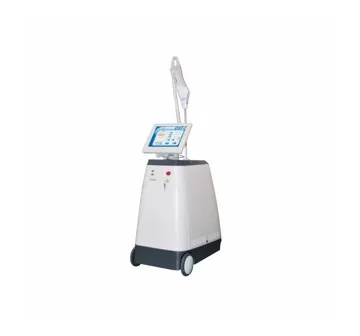
LN-01
1064nm long-pulse Nd:YAG for darker-skin hair removal and vascular lesions.
View
PE-01
High-performance E-light (HPT) platform with triple cooling and fast filter changes.
View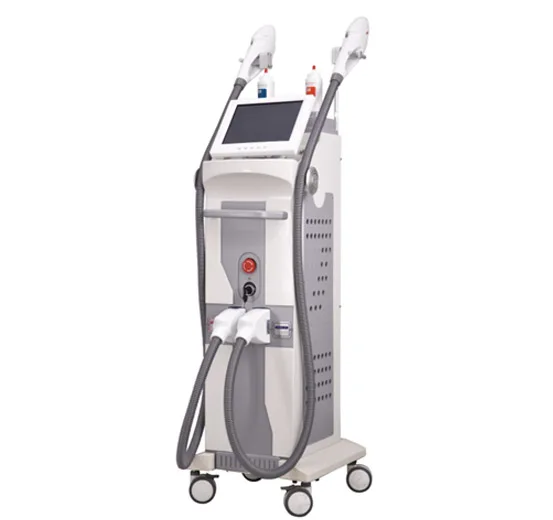
MF-05
IPL + RF console for hair removal, photorejuvenation, pigment and vascular work.
ViewFrequently asked questions
How many sessions do we quote for facial thread veins?
Quote a short course, then review it. Our clinical notes report many vascular lesions closing markedly after one or two long-pulse 1064 nm sessions, while the published five-session series at four-week intervals reached 97 percent marked improvement or clearance on facial telangiectasia — though those authors say 1064 nm isn't their first pick for superficial facial vessels. Leg vessels sat near 80 percent there, take longer, and need reflux ruled out first. Photograph at session two, stop when the mirror says stop.
Our cooling is on maximum and the vessels aren't clearing. Why?
Very probably the cooling. Simple telangiectasia lives close enough to the surface that aggressive contact cooling shields the vessel with the epidermis — our archive warns this can render the treatment ineffective, and advises shorter cooling time or an eased tip temperature. Large malformations are the opposite, where cooling is mandatory. One setting won't serve both, so put cooling on the protocol sheet next to the energy.
Can we treat a baby's hemangioma if the parents ask?
No. Refer, and refer quickly. The paediatric guideline cited above puts fastest growth between one and three months, says growth has finished by five months in most cases, and recommends referral by one month of age for problematic lesions. Photograph it, explain the timeline, send them the same day.
Can our Q-switched tattoo machine handle veins?
It cannot, and someone on your team will try. Nanosecond pulses shatter pigment photoacoustically; they don't hold a vessel wall at coagulation temperature long enough to close it. Same wavelength, different job. Keep the QN-03 for ink.
References
- Ozyurt K, Colgecen E, Baykan H, Ozturk P, Ozkose M. Treatment of Superficial Cutaneous Vascular Lesions: Experience with the Long-Pulsed 1064 nm Nd:YAG Laser. ScientificWorldJournal. 2012;2012:197139.
- Krowchuk DP, Frieden IJ, Mancini AJ, et al. Clinical Practice Guideline for the Management of Infantile Hemangiomas. Pediatrics. 2019;143(1):e20183475.
- Piccolo D, Fusco I, Zingoni T, et al. Effective Treatment of Rosacea and Other Vascular Lesions Using Intense Pulsed Light System Emitting Vascular Chromophore-Specific Wavelengths. J Clin Med. 2024;13(6):1646.
- Zallmann M, Leventer RJ, Mackay MT, Ditchfield M, Bekhor PS, Su JC. Screening for Sturge-Weber syndrome: A state-of-the-art review. Pediatr Dermatol. 2018;35(1):30-42.
- Gloviczki P, Lawrence PF, Wasan SM, et al. The 2023 Society for Vascular Surgery, American Venous Forum, and American Vein and Lymphatic Society clinical practice guidelines for the management of varicose veins of the lower extremities. Part II. J Vasc Surg Venous Lymphat Disord. 2024;12(1):101670.
- Guo L, et al. Efficacy and Safety Evaluation of 595 nm Pulsed Dye Laser Treatment in 120 Cases of Asian Infants With Port Wine Stain. Clin Cosmet Investig Dermatol. 2025.
Build a treatment bundle.
Get a quote for the machines behind this solution, configured to your clinic and market.