Laser hair removal & depilation machines
A depilation machine only pays for itself when screening, interval discipline and realistic booking keep the room full and the clients coming back.
What you are treating
A depilation machine is a professional laser or energy-based hair reduction platform, not a home device. Say a clinic owner asks which one to buy. Before you answer, work out what your book actually looks like: skin types, hair colour, body areas, and how many clients an hour the room can hold. Those four things decide the platform. An 808nm diode like the DL-07 suits high-volume leg, back and underarm work. Long-pulse 1064nm Nd:YAG, our LN-01, is the safer default once Fitzpatrick V and VI clients are a real share of your book. E-light platforms such as the MF-05 and PE-01 sit in between, where melanin contrast is poor. We don't supply alexandrite, picosecond, erbium YAG or electrolysis systems, so those aren't options from us. Whatever you choose, sell hair reduction over a course, never permanent hair removal. Follicles cycle, so no single session finishes anything. Get that language into your consultation script before anyone hands over a card.
How the treatment works
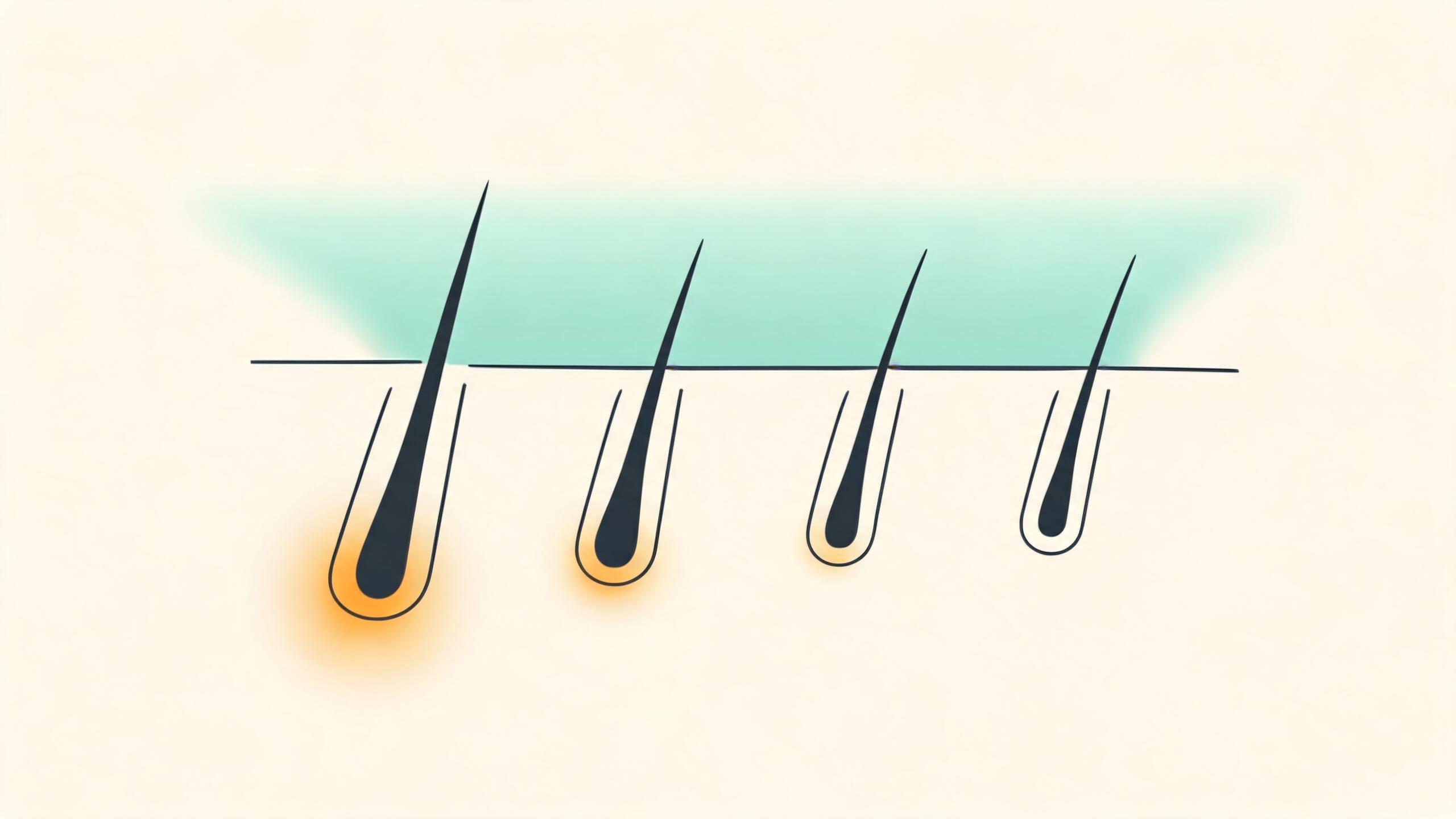
Two structures matter: the bulge region of the follicle and the dermal papilla. StatPearls describes the goal as damaging the stem cells in that bulge by targeting melanin. Here's the catch. The melanin doing the absorbing lives in the shaft and the matrix, not in the bulge itself, so heat has to travel from the pigment to the structure you want gone. No pigment, no delivery. Grey, white and fine blond hair give a melanin-targeted device nothing to grab, and no amount of extra energy changes that.
Wavelength follows skin tone, not preference. StatPearls gives roughly 600 to 1200nm as the working band, because those wavelengths are selectively absorbed by melanin while surrounding tissue lets light through. Go longer and you reach deeper while epidermal melanin absorbs less. That's why Fitzpatrick V and VI clients go to 1064nm, and why you pick a longer-wavelength filter on a pulsed light head for darker skin. The risk of dyspigmentation is highest in skin types III to VI, so that choice isn't cosmetic.
Cooling isn't a comfort feature, either. Our light-and-tissue training notes work through a hair removal case in which the epidermis reaches its damage threshold before the follicle finishes coagulating. Skip epidermal protection and the skin burns first while the follicle never gets its full dose. Sapphire contact cooling, stretched pulse durations and split pulse trains each buy back some protection. The same notes are why operators pick higher sub-pulse counts for hair work: a train heats deeper tissue while irritating the epidermis less.
A realistic treatment protocol
One session, in order. Consult and screen against the contraindication list. Photograph the area and log every parameter. Shave. Never wax or pluck, because waxing pulls out the very target you're trying to heat. Goggles on the client and on the operator, rated for the wavelength you're firing. 808nm and 1064nm eyewear are not interchangeable, so check the OD marking before every session. An unshielded pulse can cause permanent, sight-threatening damage. A 2018 review in the Journal of Clinical and Aesthetic Dermatology found that in most ocular injury cases it examined, the patient had no eye protection or was asked to remove it mid-treatment (jcadonline.com).
Cool the tip properly, test patch, wait, look, then treat. Our device documentation starts I-II skin at around 8-10 J for lip, underarm, arm, leg and bikini, and drops to roughly 4-5 J for type V. Duration and frequency pair up: 5-20ms at 1-10Hz, 25-40ms at 1-5Hz, 45-100ms at 1-2Hz, and anything over 100ms at 1Hz. The routine start our documentation recommends is cooling on first, wait for 18C, then 10Hz and 20ms, increasing according to patient feedback while moving the handle quickly. The endpoint the documentation names is papules around the follicle and red, hot skin. That's perifollicular edema, and a tech has to see it without asking.
Interval is the setting nobody adjusts. Bouzari and colleagues compared 800nm diode treatments spaced 45, 60 and 90 days apart and reported mean hair reduction of 78.1%, 45.8% and 28.7% respectively, in 24 patients followed for five months (PubMed). Same laser, same operators, only the gap changed. It's one small single-centre study, so read it as evidence that interval matters, not as a rate you can quote. As a general guideline, the initial phase is typically several sessions spaced a few weeks apart, with maintenance every six to twelve months. Rebook before the client leaves the room.
Screening questions your front desk should have printed
General clinical guidance lists the hair removal contraindications directly. Recent hormone therapy or a suspected endocrine abnormality. Obvious skin infection. A history of staphylococcal or herpes simplex infection. Keloid or hypertrophic scarring. Vitiligo or psoriasis, where the client must be warned about the Koebner phenomenon. Recent sun exposure, which leaves a hypopigmented treatment site. A tattoo inside the field. Pregnancy. A photosensitive constitution. Hypertension, heart disease, diabetes or epilepsy. Patients with high hopes, which is in the manual word for word. Undiagnosed lesions get referred, never treated. And one red line for face work: never fire inside the orbital rim. Eyebrows sit outside what a hair removal platform treats.
What the client leaves with
No hot baths, sauna, steam room, gym or swimming for 24 to 48 hours. No acids, retinoids, scrubs or fragranced products until the redness settles. Broad-spectrum SPF 30 or higher daily, plus strict sun avoidance, which is the same rule the AAD sets before treatment (aad.org). Shaving only for the whole course: no waxing, plucking, tweezing, threading, epilator or depilatory cream between visits. If hair is trapped under the skin, cool the area with the treatment head without firing. Blistering, weeping, pigment change or persistent pain means they come in and are looked at in person.
Choosing between the platforms
Diode for volume. Most clinics build their book on legs, backs, chests and underarms, and for that work an 808nm diode is usually the lowest cost per square centimetre. The DL-07 runs a square spot in sliding mode over chilled sapphire, no gel and no numbing cream, which takes both the gel step and the numbing wait out of the slot. Pulse width is adjustable from 5 to 200ms and repetition rate goes up to 10Hz. Nothing is metered per shot, so a high-volume hair book doesn't carry a running cost per pulse.
Nd:YAG for dark skin and depth. Long-pulse 1064nm is the safer default once Fitzpatrick V and VI clients are a real share of your book. The same manual you screened against above puts hair work on skin types IV to VI at the top of its indication list. The trade-off: the sapphire-cooled hair handpiece runs a 1 to 6mm adjustable window, so a full leg is a long appointment and should be priced accordingly. The LN-01 earns its floor space partly by doubling as your vascular lesion device. It's hour-metered, though, so track operating hours monthly. Lamp output energy falls off with use, so track operating hours monthly.
E-light where melanin contrast is poor. Fine, light hair defeats a melanin-only approach. Pairing bipolar RF with filtered light shifts the threshold rather than removing it: the light pulse pre-heats the follicle and creates an impedance difference, and the RF then follows that path and tops up the heat. Less pigment contrast required, but not zero. Genuinely white and grey hair gives the light pulse nothing to start with, so it stays outside what you sell. Both the MF-05 and the faster PE-01 work this way. Filters swap by skin type: shorter for fair skin, longer to protect a darker epidermis.
Slot template your front desk can book from
These are planning defaults. Build month one on them, then overwrite with your own stopwatch. Slot lengths include consent, photography and note-taking, and assume a large-spot diode in sliding mode.
| Area | Slot | Admin inside the slot | Clients per hour |
|---|---|---|---|
| Upper lip or chin | 15 min | 7 min | 4 |
| Underarms | 15 min | 7 min | 4 |
| Bikini | 20 min | 8 min | 3 |
| Lower legs | 30 min | 10 min | 2 |
| Full back or chest | 45 min | 10 min | 1 |
| Full legs | 60 min | 10 min | 1 |
Swap in a small-spot Nd:YAG and the treatment portion stretches, mostly on spot area. Run your own machine through the arithmetic: spot area times pulses per second times an overlap allowance gives square centimetres per minute, and treatment area divided by that is your pass time.
Which laser machine is best for hair removal? An honest answer
There's no single best laser machine for laser hair removal, and any supplier who tells you otherwise is selling a brochure. The answer depends on skin types, hair colour and the body areas you treat. A diode handles volume on fair to medium skin. Long-pulse Nd:YAG handles depth and darker skin. E-light handles the low-contrast cases where a melanin-only approach stalls. Most established clinics end up with two of the three platforms. And remember what we don't supply: alexandrite, picosecond and erbium YAG systems aren't in our catalogue, so they're not options from us. If a client's hair is genuinely white or grey, no platform here changes that.
Home laser hair removal systems vs clinic machines
Home laser hair removal systems are consumer products, a different category from clinic-grade equipment. That's not a criticism of any brand. It's a statement about who carries the risk. On a home device, the user screens herself, sets the parameters and judges the endpoint. In a clinic, a trained operator does all three, with eyewear, cooling and a documented test patch. Home devices trade power for convenience, which is why professionals compare platforms by specification rather than marketing. If a client asks whether she can just buy a home unit, tell her the honest difference and let her decide.
Payback: what to model before buying
Fill this in with your own local pricing. Monthly gross = clients per hour x billable machine hours x average price per session. Consumables, shot-metered (MF-05, PE-01) = (shots this month / derated lamp life in shots) x lamp price, plus filter cartridges and water. Consumables, hour-metered (LN-01) = (machine hours this month / rated lamp hours) x lamp price, plus coolant and distilled water. Consumables, diode (DL-07) = annual water filter, sapphire handpiece service and scheduled maintenance, divided by twelve. Payback in months = machine cost / (monthly gross - consumables - technician hours at their loaded rate). The course model changes one term: what you spend to win a client spreads across all six visits, so rebooking rate moves your payback month. Run the sum twice, diode versus shot-metered, on the same client mix. We can't publish price or service-life figures, so request a current quotation and consumable schedule directly. More on the running costs is in our room running costs note, and consumables, handpiece service and operator training sit on our service page.
Buyer checklist you can copy
- Which skin types and hair colours make up most of your book?
- Which body areas dominate, and what spot size do they need?
- Is the consumable billed per shot, per operating hour, or per year?
- What does the supplier's own manual list as contraindications?
- Does the platform have a second clinical use, or is it single-purpose?
- Can your technicians train on it without a factory visit?
- Who handles handpiece service and how is it scheduled?
Recommended equipment
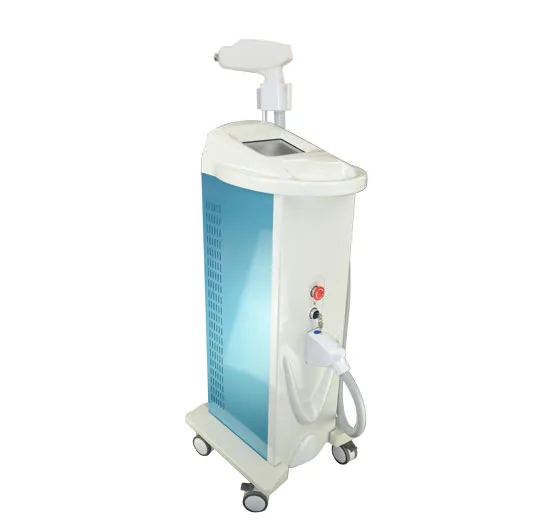
DL-07
808nm diode laser with contact cooling and high-speed sliding mode, no gel needed.
View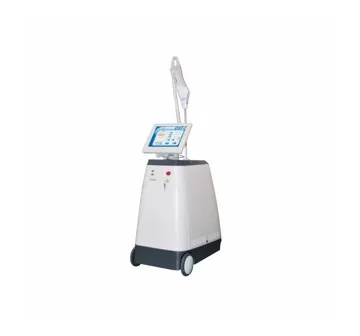
LN-01
1064nm long-pulse Nd:YAG for darker-skin hair removal and vascular lesions.
View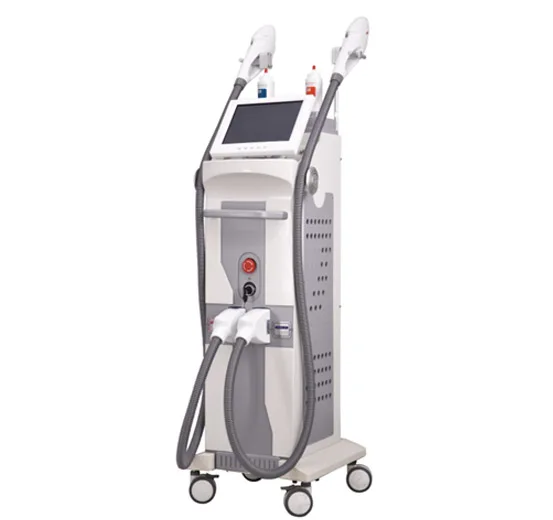
MF-05
IPL + RF console for hair removal, photorejuvenation, pigment and vascular work.
ViewFrequently asked questions
Which machine is best for hair removal?
There's no single best laser machine for laser hair removal. It depends on skin types, hair colour and body areas. An 808nm diode such as the DL-07 suits high-volume work on fair to medium skin. Long-pulse 1064nm Nd:YAG, our LN-01, is the safer default for Fitzpatrick V and VI clients. E-light platforms like the MF-05 and PE-01 help where melanin contrast is poor. We don't supply alexandrite, picosecond or erbium YAG systems.
Do hair removal machines really work?
Yes, for hair reduction over a course, not permanent removal. The FDA clearance we cite (K180353) defines permanent hair reduction as a long-term, stable reduction in the number of hairs regrowing, measured at six, nine and twelve months after a treatment regime. The AAD tells patients most people need two to six treatments, and that regrowth tends to come back finer and lighter.
Is depilatory better than shaving?
Neither belongs in the treatment room between laser sessions. Both pull or dissolve hair at the surface, but waxing and depilatory creams remove the follicle's pigment target, which is exactly what the light needs. Our device documentation advises shaving before treatment and shaving only for the whole course. If hair is trapped under the skin, cool the area with the treatment head without firing.
Do dermatologists recommend epilators?
Not as a substitute for clinic treatment. Epilators pull hair from the follicle, same problem as waxing. For a client mid-course, that interrupts the target. The published advice is shaving between visits. Anything else that removes hair from the root should wait until the course is finished and maintenance has started.
How many clients an hour can we realistically book?
Start from the slot template in the equipment section, then correct it with your own stopwatch after a month. Underarms and upper lip stack back to back; legs and backs need a full appointment. Spot size drives the treatment portion, which is why clinics with a mixed book often run a large-spot diode next to a small-spot Nd:YAG. A diode window covers far more area per pulse than a small round Nd:YAG spot.
References
- StatPearls (NCBI Bookshelf) - Laser Hair Removal: 600-1200nm melanin-absorbing band, anagen-only sensitivity of the hair matrix, bulge stem cells as the target, 4-6 sessions at 4-6 week spacing with 6-12 month maintenance
- American Academy of Dermatology - Laser hair removal: FAQs (number of treatments, finer regrowth, maintenance, results not permanent on a woman's face)
- American Academy of Dermatology - Laser hair removal: Preparation (no tanning or sunless tanner, SPF 30+, medication and isotretinoin disclosure)
- Bouzari N, Tabatabai H, Abbasi Z, Firooz A, Dowlati Y. Hair removal using an 800-nm diode laser: comparison at different treatment intervals of 45, 60, and 90 days. Int J Dermatol. 2005 Jan;44(1):50-53. PMID 15663662 (24 patients, 5-month follow-up)
- US FDA 510(k) K180353 - Diode Laser Hair Removal device: Fitzpatrick I-VI including tanned skin; permanent hair reduction defined as stable reduction at 6, 9 and 12 months
- Huang A, Phillips A, Adar T, Hui A. Ocular Injury in Cosmetic Laser Treatments of the Face. J Clin Aesthet Dermatol. 2018 (wavelength-specific eyewear for patient, operator and observers; periorbital and eyebrow treatment risk; immediate ophthalmology referral for any suspected ocular injury)
- Snast I, Kaftory R, Lapidoth M, Levi A. Paradoxical Hypertrichosis Associated with Laser and Light Therapy for Hair Removal: A Systematic Review and Meta-analysis. Am J Clin Dermatol. 2021;22(5):615-624. PMID 34057666 (9,733 patients, ~3% on face/neck vs 0.08% elsewhere, continuation of treatment often appropriate)
Build a treatment bundle.
Get a quote for the machines behind this solution, configured to your clinic and market.