The Nd:YAG Hair Removal Machine: What Changes When You Move to 1064 nm
You already run a diode or an alexandrite system. Now you've added a 1064 nm long-pulse Nd:YAG, or you're considering it. This page is about running that machine, not its spec sheet. Here is what actually changes when you move to 1064.
Why 1064 nm Changes the Risk Profile
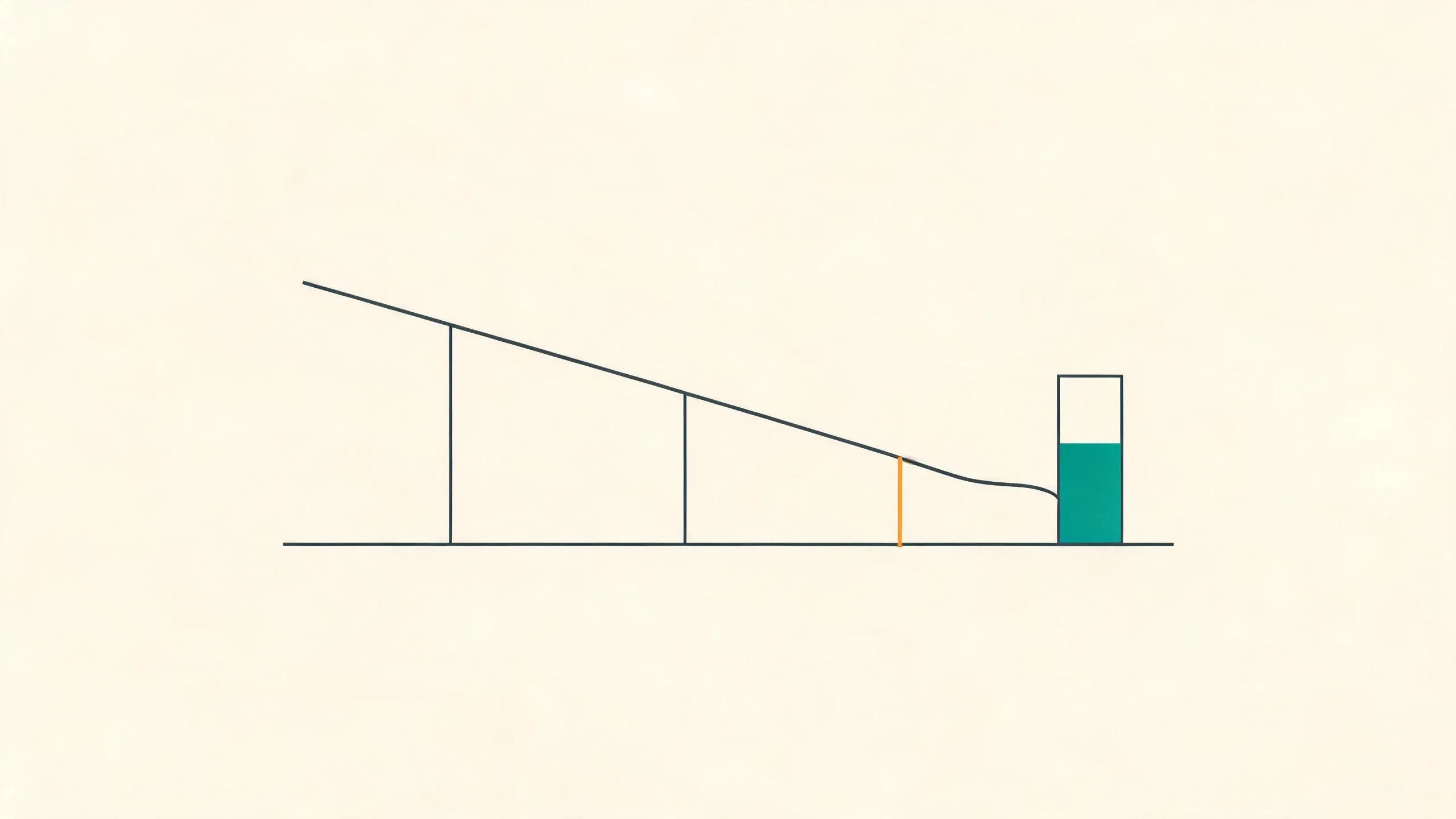
At 1064 nm, melanin absorption is much lower than at 755 or 808 nm. That's the whole point. Less energy goes into the epidermis, so you don't overheat dark skin. Fitzpatrick IV, V, and VI become treatable without the immediate burn risk you'd see with shorter wavelengths. The tradeoff: the follicle itself also absorbs less. You need higher fluence and longer pulse widths to get enough heat into the hair bulge and bulb. That narrows your safety margin.
Think of it like this. A diode at 808 nm can get away with lower energy because melanin in the hair shaft grabs it quickly. The 1064 beam passes through the epidermis almost ignored, then deposits heat deeper and slower. That's why the endpoint is a delayed perifollicular edema rather than an immediate snap. You'll learn to read a subtle change, not a dramatic one.
According to a StatPearls review on laser Fitzpatrick recommendations, longer wavelengths are preferred for darker skin because of reduced melanin absorption at the dermal-epidermal junction. That review does not give a single magic fluence. You still test every client.
Start low, watch, then move up
Your device manual will give you a range. Start at the low end for the skin type you're treating, even if the client says they've had laser before. Do one or two test pulses on the jawline or behind the ear. Wait a full five minutes. If there's no wheal, no graying, no immediate pain, you can inch up. Never jump from low to high in one session. The margin between a clean endpoint and a burn is thinner at 1064 than at 808 because you're already pushing more total energy.
Long Pulse vs Q-Switched: Same Crystal, Different Job
Both the hair removal handpiece and a tattoo removal laser use an Nd:YAG crystal. That confuses every new clinic owner. The difference is how the energy is released. Q-switched systems deliver nanosecond pulses that shatter pigment. Long-pulse systems deliver millisecond pulses that slowly heat the follicle. Hair removal uses the long-pulse mode. If your machine has both modes, you do not use the Q-switched setting on hair. You'll cook the epidermis before you touch the follicle.
This matters because marketing materials often list both in one brochure. The Q-switched Nd:YAG is for tattoo and pigment work. The long-pulse 1064 is for hair and some vascular targets. If your clinic bought a long-pulse unit, you cannot use it for tattoo removal beyond simple dark ink fading. And you shouldn't try. For tattoo work, see our tattoo removal service page.
Check the pulse duration before you book
If a client asks for tattoo removal and hair reduction in the same visit, tell them to schedule two different machines. Or tell them to come back another day. The settings are not interchangeable. This distinction is the first thing you teach a new technician.
What Changes in the Treatment Room
Moving to 1064 is slower and more painful for the client. That's not a flaw; it's the cost of safer treatment on darker skin. Your diode can cover a full back in 20 minutes. The Nd:YAG will take longer on the same area because you move the handpiece in smaller steps and pause more often to check the skin. Do not plan your schedule around the manufacturer's maximum pulse repetition rate. Plan around your actual pass time, which you'll only learn after a few weeks of use.
Cooling is no longer optional. With the diode's chilled sapphire window, you get contact cooling built in. With a long-pulse Nd:YAG, you need active cooling: cold air, a chilled tip, or gel. If your unit has a sapphire window, keep it in contact. If it uses cryogen spray, time it correctly. The 1064 beam penetrates deeper, so you must pull heat out of the surface continuously. A client who feels stinging between pulses is at risk for epidermal burns.
Pain management becomes a scheduling variable
Clients describe 1064 as a deep, rubber-band snap with a slower burn. Some will need topical anesthetic, which adds 20 to 30 minutes to the visit. Don't book them back-to-back with diode appointments. Book them in blocks so one technician can manage the cooling cycle and the client's comfort without rushing.
If a client says the pain is a 9 on a 10-point scale, stop. Lower the fluence or increase pulse spacing. Pain at 1064 is a functional indicator of skin heating, not just discomfort.
Who Should Get 1064, Who Should Not
Use the 1064 handpiece when the client's skin type makes shorter wavelengths unsafe or ineffective. That means Fitzpatrick IV, V, and VI. It also means anyone with a genuine tan, even if their baseline skin type is lighter. And anyone with a history of post-inflammatory hyperpigmentation after any procedure. Link to our guide on treating tanned and darker skin for the full clinical protocol.
Do not use 1064 on a Fitzpatrick II client with coarse dark hair and fair skin. A diode or alexandrite will clear them faster, with less pain and fewer sessions. Running Nd:YAG on that client is like using a sledgehammer for a finish nail. It works, but you're wasting chair time.
The PIH history screen
Before you treat any client with a history of PIH, ask what caused it. Was it a burn, a chemical peel, or a previous laser? If it was a laser at shorter wavelength, that's a strong signal to switch to 1064. If it was an injury or inflammatory condition, proceed cautiously. The StatPearls entry on postinflammatory hyperpigmentation notes that darker skin types are more prone, and prevention means avoiding unnecessary epidermal injury. Your 1064 setting should be chosen to minimize epidermal heating even further than usual. That might mean using a longer pulse duration and a lower fluence than you would on the same skin type without PIH history.
Are tanned clients ever candidates for diode?
Not really. If a client has an active tan, even Fitzpatrick III, you should avoid 808 or 755 until the tan fades. The 1064 can treat through a mild tan because the epidermal melanin doesn't absorb it strongly. But you still need to lower fluence by a clinically meaningful amount. If the tan is deep, wait two to four weeks. There's no formula that makes a fresh tan safe at full energy.
Nd:YAG and 808 Diode: Splitting the Schedule
Most clinics run both platforms. The diode is the volume workhorse for Fitzpatrick I-III on large body areas. The Nd:YAG is the specialist for darker skin, tanned skin, and smaller or more sensitive areas like the face, underarms, and bikini line. You might also use it for leg veins if your unit has that indication. This is not about one machine being better. It's about not turning away clients.
If your schedule is full of light-skinned body hair, the diode pays for itself faster. The Nd:YAG will look underused. That's okay if you bought it as a second modality. But if you bought it as your only hair removal machine for a mostly white clientele, you'll be slower and less profitable than you could be. That's the honest business math. See our diode laser hair removal machine guide for volume workflows.
Staffing and room allocation
Keep the Nd:YAG in a room that can be darkened, because you'll be watching for subtle skin changes under bright light sometimes. Reserve it for those specific client types. Don't let a new technician run it on a full leg without supervision. The slower pace means you can't double-book the room the way you might with a diode. One technician, one client, one focused pass at a time.
Aftercare and Complications to Expect
Post-treatment, you'll see mild erythema and perifollicular edema for a few hours. That's normal. If the client reports a flat red mark that turns brown over the next week, that's PIH starting. Treat it with strict sun avoidance, a gentle topical regimen, and possibly a low-fluence vascular laser if you have one. Our guide on managing burns, blisters, and PIH covers the full response protocol.
Blisters are rare if you test and cool properly, but they happen. If a blister forms, do not pop it. Cool compress, keep it clean, and schedule a follow-up in 48 hours. Document everything. The StatPearls entry on PIH recommends early intervention with sun protection and topical lightening agents, but in clinic you should not prescribe anything beyond your scope.
When to refer out
If a client has a history of keloids, active herpes in the treatment area, or is on isotretinoin, do not treat without physician clearance. The 1064 wavelength does not remove those risks. It just changes the thermal profile.
Frequently asked questions
Is 1064 nm Nd:YAG safe for all Fitzpatrick skin types?
It is safer for Fitzpatrick IV-VI than shorter wavelengths, but no laser is safe for everyone. Fair skin with dark hair is better treated with diode or alexandrite because those wavelengths clear hair faster and with less pain. Always do a test patch first, even on dark skin.
Why does the long-pulse Nd:YAG feel more painful than a diode?
The 1064 nm beam penetrates deeper into the dermis, and you use higher fluence and longer pulse durations to compensate for weaker melanin absorption. That deeper heating triggers more nerve stimulation. Active cooling and slower passes help, but some clients will still rate it as more intense than 808 nm.
Can I use my Nd:YAG machine for both tattoo removal and hair removal?
Only if the unit has both a Q-switched mode and a long-pulse mode. Hair removal requires long-pulse millisecond durations. Q-switched nanosecond pulses are for tattoo and pigment lesions. Do not mix the settings. Use separate machines or clearly separate modes if your console supports both.
How do I know if a client is a good candidate for 1064 instead of 808?
Choose 1064 when the client has Fitzpatrick IV-VI skin, an active tan, or a history of post-inflammatory hyperpigmentation. Choose 808 for lighter skin types with coarse dark hair who need fast bulk treatments. If the client has a tan, wait or use 1064 with reduced fluence.
More guides
Diode Laser Machine for Hair Removal: What Wears Out
Which parts of a professional diode hair removal machine age first, and what to check before you sign for one.
ReadChoosing a Professional Hair Removal Machine by Clinic Profile, Not by Spec Sheet
Before you compare joules and spot sizes, fix your clinic profile. Here's how solo salons, chains, med spas, and upgraded home studios should choose d
ReadAxilla and Bikini Line: Small Fields, Most of Your Bookings
Small fields drive most bookings. Here's how to treat axilla and bikini line safely and profitably, covering positioning, hygiene, density, and the ps
ReadAsk us the awkward question.
Spare parts, consumable cost, training time - tell us what you need to know before you buy.