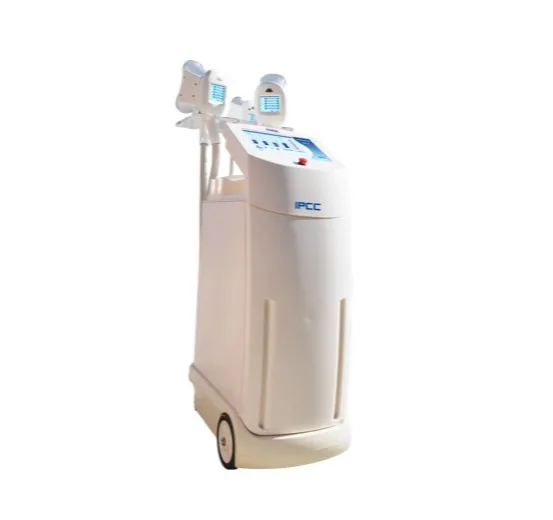
Pmise CR-01
Fat freezing is the one body device that runs without a hand on it. What that changes is your schedule, your staffing and your consultation script — which is what this page is about.
What this platform does
You've already decided you want a fat-freezing unit in the room. Fine. The question that actually matters now is a scheduling question: what does a cryo day look like, who runs it, and what does each cycle cost you in membrane and staff minutes?
Cryolipolysis is strange among body devices. Once the applicator is seated and the vacuum has taken hold, nothing further depends on the hand that placed it. The cycle runs itself out. That one fact quietly rearranges your staffing, your room turnover, and where the real skill lives — which is the consultation before the machine is switched on, not the half hour after.
So this is the operator's view of the CR-01. How a session actually goes. How to screen. How far apart to space repeat cycles, and what to say when a client asks for a number. The spec sheet is already on this page; we won't repeat it.
Technical detail
| Technology | Controlled fat freezing |
|---|---|
| Applicators | Interchangeable, contour-shaped |
| Treatment time | Per applicator, automated |
| Downtime | None |
| Skin types | All types |
| Applications | Body contouring, fat reduction |
| Warranty | 12 months, lifetime maintenance |
How it works
One session, minute by minute
- Pinch first. If you can't lift a distinct fold between finger and thumb, the applicator has nothing to draw in and you have no business booking the cycle. Diffuse, firm abdominal fullness isn't this machine's problem to solve.
- Photograph before you mark. Same distance, same lights, same standing posture, feet on tape marks. Do this badly and the twelve-week review becomes an argument you can't win.
- Barrier layer, no exceptions. Petrolatum on the skin, then an antifreeze membrane across the whole footprint. Our device manuals are blunt about this step, and it's the one staff skip when they're running late. Cold injuries trace back here more than anywhere else.
- Seat the applicator, then check the seal. The fold should draw up evenly and hold. A slack or lopsided draw cools unevenly, and uneven cooling is where those ridge complaints come from weeks later.
- Stay for the first ten minutes. That's when a poor seal announces itself, and when a client who's going to panic about the cold will panic. After that most people settle. One of our archived notes mentions a client falling asleep on the bed at a trade show, which is about right for how uneventful the middle of a cycle is.
- Let the timer run. Our archived protocol sheet uses thirty minutes per site as the working default, with the cooling setpoint down in the 1-4 °C band. Starting point, not gospel — a thin fold wants less.
- Massage the moment it comes off. The tissue releases cold, pale and firm. That's expected. A short, firm manual massage of the treated block is standard practice, and there's published support for it: Boey and Wasilenchuk's 2014 split-abdomen study in Lasers in Surgery and Medicine found greater fat-layer reduction on the massaged side at two months, though the gap had narrowed by four.
What new operators get wrong
Three things, mostly. Skipping the membrane when the schedule slips. Reaching for the large applicator because it looks more thorough, when the fold only fills the small one. And over-talking the consultation — promising a number, a dress size, a date. That last one costs you refunds rather than injuries, but it costs you far more often.
Applications and protocol
Screen hard. It's a five-minute conversation that saves you a complaint file.
- Discrete, pinchable bulges: flanks, lower abdomen, bra-line rolls, outer thighs, upper arms
- Clients whose weight is stable and who understand this isn't weight loss
- Contour tidying after weight change or pregnancy, once things have settled
- Refinement of a residual bulge after liposuction, at the practitioner's discretion
Who you turn away
Cold-related conditions are absolute: cryoglobulinemia, cold urticaria, paroxysmal cold hemoglobinuria. A hernia at the treatment site rules it out too. So does pregnancy or breastfeeding, and so does any lesion inside the footprint you can't confidently identify — refer or biopsy, don't freeze it. On body mass, the US clearance for the original cryolipolysis system is written around candidates at a BMI of 30 or less, for submental area, thigh, abdomen and flank. Even in markets where that clearance doesn't apply to you, it's a sane screening anchor. None of this is medical advice; candidate selection belongs to a qualified practitioner working under your own regulations.
Spacing a course, and what to sell alongside
One cycle per site, then wait. Our archive puts repeat treatment on the same area at roughly two months apart, because clearance of the affected cells is gradual and you simply cannot judge the result early. Review with photographs, then decide. Here's the commercial catch nobody mentions in a demo: cryo is a low-frequency service, and a client who visits twice a year isn't a relationship. Pair it. SM-01 ultrasonic cavitation fills the gaps with shorter, more frequent visits that package into a course, and RF-01 radiofrequency answers the laxity question cryo doesn't touch. Our body contouring overview covers how the three get sequenced in one room.
Key advantages
The chair-time arithmetic
- Hands-on minutes are small. Consult, prep, seat the applicator — after that the machine works alone. Your therapist can prep or finish a client next door.
- Two handles at once. Bilateral flanks inside one appointment slot instead of two. That's the difference between a workable cryo day and a bottleneck.
- Consumables are predictable. One antifreeze membrane per applicator per session, plus petrolatum. No lamps, no filters, nothing that degrades with shot count. Against a light-based platform sharing the same room, that's a real cost gap in your favour.
- Maintenance is mostly water. The unit runs distilled water in a closed loop. Keep to the change interval in the manual, never run it dry, and that's the whole story.
Training curve versus consultation curve
The hands are cheap to train. A careful therapist can be running supervised cycles within a day or two, because there's no technique to master: seal, settings, timer. Consultation is the expensive part, and it's the part that decides whether you end up refunding. Write a script. Make every therapist say the same thing about timelines, about photographs, about nobody being able to promise a percentage. Then hold them to it.
One operational habit worth building from day one: log every cycle — site, applicator, setpoint, duration, operator. If something unusual turns up months later, you'll want that record. So will whoever you refer the client to. Commissioning, spares and warranty terms sit on our service page.
Frequently asked questions
What do we tell a client who asks when they'll see results?
That it takes weeks, and that the first proper review happens around the twelve-week mark with photographs side by side. Nothing more. Change appears gradually as the body clears the affected cells, so there's no honest way to hand over a date. Resist the percentage question hardest of all. Any figure you quote came from someone else's trial, someone else's applicator geometry, someone else's client — and it turns into a promise the second it leaves your mouth.
What calls should the front desk expect afterwards?
A flushed patch for a few hours. Tingling. Numbness in the treated area that can linger for weeks, which is the one that generates most of the phone calls, and which resolves. Some clients report a delayed ache in the days after a cycle. A 2023 adverse-event review in the Journal of Cosmetic Dermatology by Deligonul, Yousefian and Gold collects what's been reported in the literature, and it's worth reading before you write your aftercare card. Give people a number to call and a plain description of what's normal, and most of those calls never happen.
How worried should we be about paradoxical adipose hyperplasia?
Aware, not paralysed. PAH is the complication where the treated area firms up and enlarges instead of shrinking. A multicentre Canadian review by Nikolis and Enright, covering 8,658 cycles in 2,114 patients, reported it in 0.15% of cycles — rare, though newer systematic review work argues it goes underrecognised. Mention it before you treat, keep the cycle log, and refer anything that grows rather than shrinks. Don't try to manage it in the treatment room.
Can a junior therapist run this unsupervised?
The cycle, yes, once they've been signed off on seal quality and the barrier step. Screening is a different job and in most rooms it belongs with whoever is qualified to rule out the contraindications above. Split those two roles honestly and your throughput rises without your risk rising with it.
How many machines does a body-contouring room actually need?
Fewer than a distributor will tell you, more than one. A cryo unit alone leaves you unable to answer two of the three questions clients walk in with — broad-area softness and loose skin. Start with CR-01 if stubborn pinchable bulges are what your consultations keep surfacing, then add as the booking pattern tells you to. Send us your treatment mix and local voltage through contact and we'll spec it before anything ships.
References
- Nikolis A, Enright KM. A Multicenter Evaluation of Paradoxical Adipose Hyperplasia Following Cryolipolysis for Fat Reduction and Body Contouring: A Review of 8,658 Cycles in 2,114 Patients. Aesthetic Surgery Journal. 2021;41(8):932-941
- Deligonul FZ, Yousefian F, Gold MH. Literature review of adverse events associated with cryolipolysis. Journal of Cosmetic Dermatology. 2023;22(Suppl 3):31-36
- Boey GE, Wasilenchuk JL. Enhanced clinical outcome with manual massage following cryolipolysis treatment: a 4-month study of safety and efficacy. Lasers in Surgery and Medicine. 2014;46(1):20-26
- US FDA 510(k) K151179 - cryolipolysis system indications for use (BMI 30 or less; submental area, thigh, abdomen, flank)
Quote the Pmise CR-01.
Tell us your country and clinic type. We reply within 24 hours with technical detail, pricing and the spare-parts picture.