Body contouring
Two very different jobs share one menu heading here. One machine you set and walk away from; the other ties up a technician's hands for forty minutes. Staff the room accordingly.
What you are treating
Body contouring splits into two operating models here, and the split is about staff time before it's about physics. It's one of the lowest-barrier lines to add to a menu — no consumable licence, no melanin-dependent screening — and one of the easiest to run badly.
Two operating models under one heading
Cold work runs on a timer. Prep the site, seat the applicator, set the cycle, leave the room — our device notes say plainly that once the client is set up, the treatment isn't technique dependent and needs no further operator time. Vacuum-RF and cavitation are the mirror image: somebody stands there all session, moving the handle, watching skin colour, easing parameters up as tolerance builds.
That difference drives your rota, your pricing and, frankly, your hiring.
How the treatment works
Sorting the client at consult
Ask them to point. One discrete pinchable pocket — a flank, a lower abdominal roll, submental fullness — is cold territory: one or two visits, almost no chair time on your side. A vague sweep across the whole waist or both thighs is a course, and cavitation followed by an RF pass is what fills it.
Neither is a weight-loss service. Say so out loud at consult, write it on the consent form, and mean it. Our internal documentation frames candidacy the same way: localized bulges on someone already near a stable weight, not global reduction.
What you can honestly promise
Here's the number that keeps a consult honest. Ingargiola and colleagues pooled nineteen cryolipolysis studies for Plastic and Reconstructive Surgery in 2015 and reported average fat-layer reduction ranging from 14.67% to 28.5% by caliper, and 10.3% to 25.5% by ultrasound. A range, not a headline. Quote it that way, and photograph your baselines properly — the follow-up either shows a change or turns into an argument.
Timing matters as much as magnitude. Our clinical notes put visible change around three weeks and the fuller picture nearer two months. Say that at booking, not at the six-week review.
Screening that actually cancels a booking
Pacemakers, implanted defibrillators and other electronic implants rule out RF and cavitation outright. So do epilepsy, kidney stones, serious cardiovascular disease, and metal implants in the treatment field. Pregnancy rules out everything here. Active infection, herpes, broken skin or any suspicious lesion in the area — reschedule and refer if you're unsure. Three cold-related conditions rule out cryolipolysis absolutely — cold urticaria, cryoglobulinaemia and paroxysmal cold haemoglobinuria — and so does a hernia anywhere in the treatment footprint.
One thing works in your favour here: none of these modalities target melanin, so Fitzpatrick type rarely decides it. That widens your client base. It doesn't excuse a thin history. The screening verdict belongs to a licensed practitioner — this page only lists what has to get asked.
A realistic treatment protocol
Read this before any parameter below. It's operational guidance for clinic teams, drawn from our device manuals and published literature, not medical advice. Assessment, screening and treatment decisions belong to a qualified practitioner.
Running a cold cycle, step by step
Cleanse the area and the handle. Apply petrolatum, then the antifreeze membrane — skip it and you're looking at a cold injury, so make it a checklist item your technician signs off. Choose the applicator by anatomy: a flank doesn't take the same cup as a submental pocket.
- Cold, day one: suction power 3–4, infrared power 4–5, suction frequency 1, work time 30 min, setpoint 1–4 °C. That's the starting table in our manual, and the console steps a degree at a time to a cooling maximum of 14 °C. Colder is more aggressive, so hold at the warm end of that 1–4 °C band until a technician has run the applicator a few times.
One number on that dial isn't a temperature at all. Set 15 °C and the machine stops cooling — that's the between-clients idle position our interface documentation recommends, not the gentlest treatment setting. Teach it on day one.
Then check the draw. If the vacuum isn't holding a proper fold between the plates, the temperature on screen isn't the temperature reaching the fat. Confirm the fold, confirm the setpoint, start the timer.
Don't walk away at the end of it. The block releases pale and firm — expected — and gets a manual massage there and then: a minute of vigorous kneading, then a minute of circular work with the finger pads. That protocol comes from Boey and Wasilenchuk's split-abdomen study (Lasers in Surgery and Medicine, 2014), where the massaged side was further ahead on fat-layer reduction at two months, with the gap narrowed by four. It costs a minute of the takedown you have already budgeted.
Running a hands-on vacuum-RF or cavitation session
Completely different rhythm. Clean the field and dry it. Trim first — hair over a centimetre snags in the roller and suction. Wipe the handpiece with alcohol between clients. Monopolar RF? Place the return pad first, usually at the waist, metal connector clear of skin.
- Abdomen and buttock: RF power 10 for the first ten minutes, then 8. Suction intensity 6, infrared 5, suction frequency 3 then 4, wheel speed 2. The step-down is deliberate — the field is already warm by minute ten, so you keep tissue moving instead of loading more heat into it.
- Thighs and upper arms: RF 8 then 6, everything else unchanged. Thinner tissue over bone, so you start gentler. Face and eye work sits lower again.
Two tricks worth teaching in week one. Tight skin? Suction frequency two. Flabby skin? Four. And at frequency one the handle suctions continuously while the roller stops — rarely what you want.
Your endpoint is even warmth and mild erythema, epidermal temperature around forty degrees. Start every client at the lowest comfortable setting, then step up after about ten minutes as tolerance builds. If the energy is reading high on their face, move the handle faster or raise the suction frequency before you pull power down.
Course design and interval
Cold: one placement per area, a thirty-minute cycle as your default, and a repeat considered around the two-month mark once the first result has landed. Hands-on work is a course — ten to twelve sessions, twice weekly for the first fortnight and then weekly, three to seven days between visits. Whole body runs sixty to ninety minutes; a single area, twenty to forty.
Put that gap in the rota before you write it. A cold cycle wants a technician only at either end; a hands-on session holds one for its whole length. The day-count arithmetic is in the FAQ below.
Aftercare, and the calls you'll get
Erythema in the treated field is expected and settles within a few days. No shower for eight hours after vacuum-RF, no sauna or heavy massage for twenty-four, sun protection and plenty of water that week. Cold-treated clients go back to work the same afternoon, sometimes with a flushed patch and transient numbness.
Put one rare complication in your consent form and brief reception on it. Paradoxical adipose hyperplasia: treated tissue enlarging instead of shrinking. Nikolis and Enright reviewed 8,658 cycles in 2,114 patients across eight Canadian centres and reported an incidence of 0.15% per cycle and 0.43% per patient (Aesthetic Surgery Journal, 2021). Rare. Not zero. It doesn't resolve on its own, and in an analysis of FDA MAUDE reports from 2015 to 2021 it accounted for the majority of the 660 device reports filed under noninvasive body contouring. Know where you'd refer before you need to, and refer rather than retreat the area.
Choosing between the platforms
Which console goes in which room
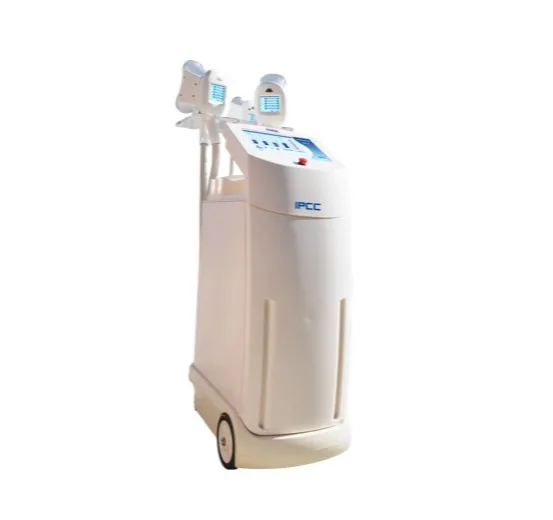
- CR-01 for pocket work. Four handle sockets, one handle per socket, with two large (LP-L1) and two small (LP-S1) applicators. Two of those handles run at the same time, each handle's cooling temperature reported independently on screen, so a bilateral pair such as both flanks is one appointment rather than two. And a running cycle needs no operator, so a small team copes: set the client up, walk out.
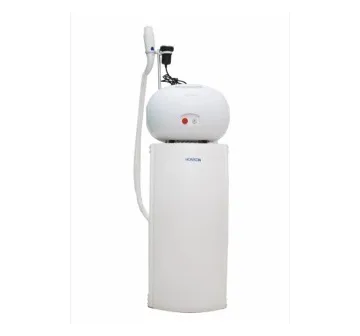
- SM-01 for broad-area circumference work across thighs, waist and flanks. 40 kHz is the number that matters operationally — a low-frequency, non-focused field, so technique is coverage and pace, not aiming at a depth.
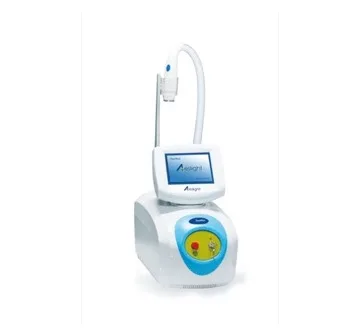
- RF-01 when the complaint is laxity rather than volume. Skin that lost fat and didn't retract needs heat, not more fat reduction — the finishing stage of a course, and it overlaps your resurfacing and tightening menu.
Utilities, consumables, training curve
- Water. The cold platform is water-cooled. Around 1800 mL of distilled water at commissioning, a second fill after about five minutes of running since the handles and radiator hold some back, then a full change roughly monthly under heavy use. Run it dry once and you're replacing the cooling stack.
- Power and room. 220 V or 110 V at 50/60 Hz, plus or minus 10%. Outside that band you need a regulator rated above 3 kVA. Treatment room at 10 to 30 °C, 20 to 80% humidity, ventilated, out of direct sun.
- Consumables. Antifreeze membranes and petrolatum for cold; coupling gel for ultrasound and RF. Membranes are single-use and go per treated site, not per client — both flanks in one visit means two.
- Training. Cold is close to a checklist skill — a careful technician is safe on it within a day or two. Hands-on work takes longer; reading tolerance and pacing a handle isn't something a parameter table teaches. Budget several supervised sessions.
- What you get with the machine. One-year warranty and lifetime maintenance on every unit we ship, plus commissioning and operator training. Spare-parts terms and lead times are quoted per market, so get yours in writing before you sign.
Cost per session, two different shapes
Fill in your own local prices; the arithmetic is what travels. Cold, per session = treated sites in the visit × your purchase price per antifreeze membrane, petrolatum rounded to zero, plus your technician's loaded hourly rate × the ten or so minutes of prep, seating and takedown each placement costs. The cycle in between is free of staff time; the two ends of it are not, and a formula that drops them prices cold too low. Budget membranes off sites, not clients. Hands-on, per session = coupling gel, near enough nothing, plus your technician's loaded hourly rate × the hours that session ties up the room. A twenty-minute thigh and a ninety-minute whole body are not one product. Then spread what both share: distilled water and the monthly change, a regulator above 3 kVA if your mains sits outside the band, and the supervised hours before anyone works alone.
Cold is mostly consumables with a slice of wages; hands-on work is almost all wages. Price them the same way and one subsidises the other.
Want the full parameter tables for your configuration, or the terms our service team works to in your market? Ask us.
Frequently asked questions
How many clients can one room realistically handle in a day?
Cold first, because it's the easy sum. A thirty-minute cycle plus about ten minutes of prep and takedown is forty minutes a placement, so ten to twelve cold clients per machine position across an eight-hour day. The console holds four handles, one per socket, and runs two of them together, so a bilateral pair such as both flanks finishes inside one forty-minute slot instead of two. Your ceiling is handles and rooms, not staff — the cycle needs no operator.
Hands-on work is capped by technician hours and nothing else. A whole body is sixty to ninety minutes, so with turnaround that's five to six whole-body clients a day. A single area runs twenty to forty minutes, call it thirty to fifty with turnaround, so roughly ten to sixteen single-area clients — low end of that once notes, bed changes and late arrivals sit inside the slot. Want more? Hire.
Which machine should a clinic buy first?
Whichever complaint walks through your door most often. Stubborn single pockets point to cryolipolysis — clearest before-and-after, fewest visits. A general softness across waist or thighs suits a cavitation-plus-RF package. Most clinics end up running both. Very few need both in month one.
What does a new technician get wrong most often?
Three things, roughly in order. Skipping or misplacing the antifreeze membrane. Starting too high because the client said they could take it — ramp up after ten minutes instead, that's what the tables are built for. And treating someone who should have been screened out, usually an implant nobody asked about. All three are training failures, not equipment failures.
Is pigmentation a concern on darker skin?
Much less than with light-based work. Nothing here targets melanin, so contouring runs the full Fitzpatrick range. Transient erythema and the odd bruise still happen.
How do we handle a client who says nothing happened?
Photograph and measure at baseline, same light and posture every time, or there's no conversation to have. Selective cryolysis was first demonstrated by Manstein's group at the Wellman Center in 2008, so the effect is real — but gradual and partial, a percentage of a fat layer rather than its removal. Most disappointment traces back to what was said at consult.
References
- Ingargiola MJ, Motakef S, Chung MT, Vasconez HC, Sasaki GH. Cryolipolysis for Fat Reduction and Body Contouring: Safety and Efficacy of Current Treatment Paradigms. Plast Reconstr Surg. 2015;135(6):1581-1590.
- Nikolis A, Enright KM. A Multicenter Evaluation of Paradoxical Adipose Hyperplasia Following Cryolipolysis for Fat Reduction and Body Contouring: A Review of 8658 Cycles in 2114 Patients. Aesthet Surg J. 2021;41(8):932-941.
- Manstein D, Laubach H, Watanabe K, Farinelli W, Zurakowski D, Anderson RR. Selective cryolysis: a novel method of non-invasive fat removal. Lasers Surg Med. 2008;40(9):595-604.
- Boey GE, Wasilenchuk JL. Enhanced clinical outcome with manual massage following cryolipolysis treatment: a 4-month study of safety and efficacy. Lasers Surg Med. 2014;46(1):20-26.
- Lim Y, Wulkan A, Avram M. FDA MAUDE database reported adverse events on noninvasive body contouring, cellulite treatment, and muscle stimulation from 2015 to 2021. Lasers Surg Med. 2023;55(1):146-151.
Build a treatment bundle.
Get a quote for the machines behind this solution, configured to your clinic and market.